Sungrow Launches SG125CX-P3 to Redefine Safety and Performance in C&I Solar
MUNICH, June 24, 2026 /PRNewswire/ -- Sungrow, the globally leading PV inverter and energy storage system (ESS) provider, today unveiled the SG125CX-P3 at Intersolar Europe 2026 — an all-new 125kW commercial and industrial (C&I) string inverter featuring a comprehensive active protection architecture, with system capacity scalable up to 3 MW through parallel configuration.
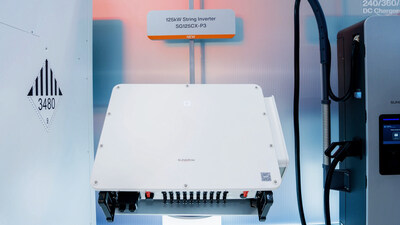
As commercial and industrial (C&I) solar projects grow in scale and complexity, system owners face mounting pressure to maximize energy yield, minimize downtime, and protect assets across increasingly diverse site conditions. The SG125CX-P3 addresses these demands with a combination of 98.5% efficiency, system-level active protection, and intelligent operations and maintenance (O&M) tools designed for the next generation of C&I PV applications.
Higher Energy Yield Across Operating Conditions
The SG125CX-P3 is designed to maximize energy yield, delivering up to 98.5% conversion efficiency and supporting mainstream high-power modules with 40A 2-in-1 input current, enabling better utilization of high-power modules. Its Global MPPT scanning technology contributes up to a 2% increase in energy yield by continuously scanning the full power curve to identify the true maximum power point, even under complex operating conditions. At night, the inverter performs PID recovery to help maintain long-term system performance.
For thermal performance, the SG125CX-P3 inverter is equipped with the SG ECOOLIN® Circulating air cooling system, which extends the derating threshold by 5–10°C under complex operating conditions. Even at 50°C, it delivers a higher energy yield than conventional cooling designs.
System-Level Active Protection
The SG125CX-P3 features a comprehensive active protection architecture that dynamically adapts to different operating conditions, enhancing system safety through more precise and reliable protection.
- Enhanced Arc Fault Detection: The upgraded AFCI 3.0+ technology dynamically adapts detection thresholds to varying operating conditions for more accurate arc fault detection, with support for arc currents up to 40 A and detection distances up to 600 m.
- PV to Ground Fault Protection: The system continuously monitors all operating conditions and intelligently distinguishes actual ground faults from environmental disturbances, triggering fast protection within 15 ms.
- Intelligent 2-in-1 String-Level Disconnection: Powered by a data-driven fault analysis model, the inverter precisely identifies high-risk DC-side faults and isolates them within 20 ms for enhanced system protection.
- Patented Anti-Condensation Technology- The SG125CX-P3 actively prevents condensation under varying operating conditions, reducing the risk of short circuits and system failures in harsh environments.
The inverter further enhances system reliability with IP66 protection, a C5 anti-corrosion rating, integrated DC Type I+II and AC Type II surge protection, and a patented pressure-relief structure, ensuring long-term stable and safe operation.
Effortless O&M, Higher Efficiency
The SG125CX-P3 significantly improves O&M efficiency for commercial solar systems. Its module-level insulation fault localization reduces inspection and maintenance time by up to 95%, enabling operators to quickly pinpoint and resolve faults.
Beyond insulation positioning, the SG125CX-P3 further streamlines operations through smart I-V curve diagnostics, full-process fault tracking for over 30 fault types, and a variable-frequency air duct self-cleaning system with scheduled self-checks and fan reverse dust removal — enabling maintenance-free operation without shutdown.
Expanding Sungrow's C&I Solar-Plus-Storage Ecosystem
As demand grows for more flexible and resilient energy systems, solar-plus-storage integration is becoming increasingly important for commercial and industrial users. Together with Sungrow's SHCX series hybrid inverters and PowerStack and PowerKeeper energy storage systems, the SG125CX-P3 expands Sungrow's C&I solar-plus-storage offering across AC-coupled and DC-coupled applications, enabling flexible system upgrades across diverse scenarios.
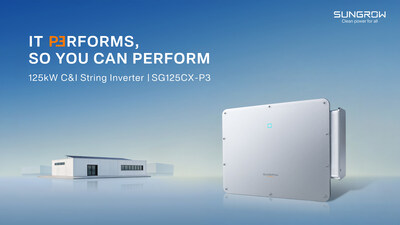
Photo - https://mma.prnewswire.com/media/2999557/125CX_PE.jpg
Photo - https://mma.prnewswire.com/media/2999558/P3RFORMS_KV_Poster.jpg
Logo - https://mma.prnewswire.com/media/1344575/Logo.jpg
 View original content:https://www.prnewswire.co.uk/news-releases/sungrow-launches-sg125cx-p3-to-redefine-safety-and-performance-in-ci-solar-302809047.html