IBM Launches Compact z17 and LinuxONE Systems to Address Data Center Space and Cost Constraints
Powerful single frame and rack mount systems and new AI and automation software upgrades for IBM Z and LinuxONE 5 help enterprises deploy workloads with more flexibility
ARMONK, N.Y., July 7, 2026 /PRNewswire/ -- IBM (NYSE: IBM) today announces new IBM z17 and IBM LinuxONE 5 configurations, marking the first time IBM is offering rack mount alongside single frame systems across its full Z and LinuxONE portfolio. The expanded IBM z17 and LinuxONE 5 portfolios now offer a wide range of deployment options, engineered with the same flagship performance, security, and ecosystem standards. New single frame and rack mount options provide additional ways for organizations to position their infrastructure where it fits best for their business needs, helping support flexibility and operational efficiency.
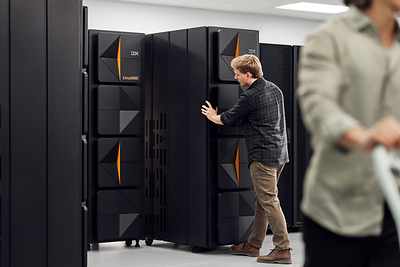
Organizations processing highly sensitive workloads at scale are facing record-low data center vacancy and rental rates exceeding $400 per kW/month, according to CBRE's 2026 Global Data Center Trend Report.1 At the same time, they need infrastructure that can optimize their data center footprint while prioritizing the resilience required for their core applications. Enterprises can use IBM z17 and LinuxONE 5 rack mount and single frame systems to address these challenges, optimizing their data center real estate to meet today's realities.
"The number of mission-critical workloads is rising at an incredible pace, forcing organizations to make tough decisions about performance, AI integration, and infrastructure footprint," said Tom McPherson, General Manager, IBM Z and LinuxONE. "With these new IBM Z and IBM LinuxONE systems, we're making it easier to run workloads where they make the most sense, while opening the door for a wider range of organizations to benefit from these technologies for the first time."
New Systems Built for Data Center Flexibility
The new IBM z17 and IBM LinuxONE 5 configurations support up to 82 cores and 18 TB of memory across two processor drawers, representing about a 20% increase in core count and 12% increase in memory capacity. Single processor capacity of IBM z17 ME2 provides full speed IBM z/OS configurations including 10% greater throughput per core than IBM z16 A02 with some variation based on workload and configuration.2
Clients have the flexibility to co-locate IBM and non-IBM equipment to achieve the best fit-for-purpose installation in their data center. Each system is designed to help organizations reclaim space, improve energy efficiency, and integrate seamlessly into existing environments:
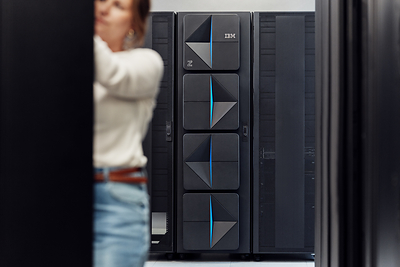
- IBM z17 single frame is a fully packaged solution in an IBM rack and intelligent power distribution units (iPDUs), delivered as a complete enclosed unit ready to deploy, now with the added flexibility for clients to co-locate other technologies within the frame.
- IBM z17 rack mount allows clients to install IBM Z components directly into their own industry-standard rack, with built-in flexibility for co-location with other technologies.
- IBM LinuxONE Rockhopper 5 is the scalable, multi-drawer LinuxONE system for high-density workloads, with on-chip AI acceleration, confidential computing, and post- quantum cryptography available in both single frame and rack mount configurations.
- IBM LinuxONE Rockhopper 5 rack mount and Express offerings deliver enterprise-grade Linux, confidential computing, and on-chip AI acceleration in a compact 18U configuration. Designed for organizations supporting a smaller set of workloads, the offering provides a cost-efficient entry point that can scale as business grows, while prioritizing security, resiliency, and performance.
As with the rest of the IBM z17 and LinuxONE 5 portfolio announced last year, the single frame and rack mount systems deliver advanced multi-model AI inferencing through the IBM Telum® II processor, Red Hat OpenShift AI and the IBM Spyre™ Accelerator to deliver in-transaction predictive AI and generative AI.
Maximizing Business Value at the Core
Building on the flexibility of IBM Z and IBM LinuxONE systems, IBM is announcing new software and management capabilities designed to help clients simplify infrastructure operations, reduce the skills required to run the platform, and get more value from the workloads already running their business.
- IBM Infrastructure Management for Z and LinuxONE brings together provisioning, configuration, and operations together. Enterprises can now leverage Terraform and widely adopted Infrastructure-as-Code that are engineered to automate infrastructure deployments, and orchestrate configurations in a unified user interface with a simple visual I/O topology and configuration while addressing the number of specialists required.
- IBM COBOL Elevate for z/OS is built to simplify modernization and optimize performance for COBOL applications running on IBM z17, helping clients get more value from the applications they depend on with no rewrites or specialized skills required, with availability beginning September 18.
- Post-quantum cryptography security is now standard on z17 and LinuxONE Rockhopper 5 systems, leveraging post-quantum cryptography, confidential computing, and enterprise-wide secrets management.
- New IBM Crypto Discovery & Inventory capabilities are engineered to simplify security operations by giving security teams a consolidated view of their cryptographic posture across the enterprise, helping them prepare for post-quantum standards with end-to-end visibility.
"With the emergence of generative AI methods, we need the highest levels of performance, efficiency, resiliency and security to safely hold, and process the sensitive datasets," said Dr. Owain Kenway, Head of Research and Development (Platform Technologies) in ARC at University College London. "The new IBM LinuxONE 5 single frame, rack mount, and Express models enable organizations like us to access advanced technologies at cost-effective prices, and help our academic teams deliver outstanding research."
Availability
The new z17 single frame and rack mount configurations, IBM LinuxONE Rockhopper 5, and IBM LinuxONE 5 Express will all be generally available August 12, 2026. IBM Infrastructure Management for IBM Z and IBM LinuxONE will be generally available August 14, 2026. IBM COBOL Elevate for z/OS will be generally available September 18, 2026. For more information, visit https://www.ibm.com/products/z17 and https://www.ibm.com/products/linuxone-5.
Statements regarding IBM's future direction and intent are subject to change or withdrawal without notice, and represent goals and objectives only.
Disclaimer:
- CBRE's 2026 Global Data Center Trend Report.
- Based on internal measurements. Results may vary by customer based on
individual workload, configuration and software levels. Visit LSPR website for more details at: www.ibm.com/support/pages/ibm-z-large-systems-performance-reference
About IBM
IBM is a leading provider of global hybrid cloud and AI, and consulting expertise. We help clients in more than 175 countries capitalize on insights from their data, streamline business processes, reduce costs and gain the competitive edge in their industries. Thousands of government and corporate entities in critical infrastructure areas such as financial services, telecommunications and healthcare rely on IBM's hybrid cloud platform and Red Hat OpenShift to affect their digital transformations quickly, efficiently and securely. IBM's breakthrough innovations in AI, quantum computing, industry-specific cloud solutions and consulting deliver open and flexible options to our clients. All of this is backed by IBM's long-standing commitment to trust, transparency, responsibility, inclusivity and service.
Additional Sources
Media contacts:
Marshall Hampson
IBM Infrastructure Communications
Marshall.hampson@ibm.com
Aishwerya Paul
IBM Infrastructure Communications
Aish.Paul@ibm.com
 View original content to download multimedia:https://www.prnewswire.co.uk/news-releases/ibm-launches-compact-z17-and-linuxone-systems-to-address-data-center-space-and-cost-constraints-302818825.html