IBM Advances Enterprise AI Software Development with Multi-Agent Capabilities and Specialized Modernization Workflows
- Latest IBM Bob Updates Help Enterprises Deliver Production-Ready Software Fast
- IBM Bob is Built to Optimize the Cost of AI-Driven Development Beyond the Model
- IBM Bob Now Offers Pre-Built, Customizable Enterprise Workflows for IBM Z, IBM i, Plus Java Modernization
ARMONK, N.Y., July 9, 2026 /PRNewswire/ -- Today, IBM (NYSE: IBM) announced major updates to IBM Bob, its agentic software development platform, including new multi-agent capabilities, built-in AI cost and use analytics, and pre-built, specialized workflows for modernizing enterprise systems.
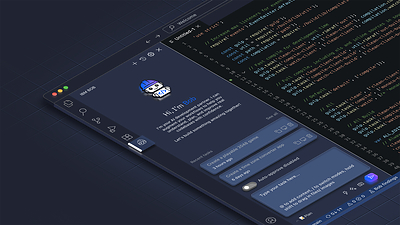
Now that organizations are using AI to write massive amounts of code, their software development challenges have moved to other parts of the process with 85% of DevSecOps professionals surveyed agreeing that AI has shifted the bottleneck from writing code to reviewing and validating it.1 IBM Bob is architected to bring AI capabilities wherever software engineering work happens. Rather than limiting AI to a single development interface for isolated tasks, Bob provides a unified foundation for teams to coordinate across the software development lifecycle.
For example, engineers at Jack Henry, a leading financial services and banking technology provider, were facing challenges maintaining and evolving a large RPG codebase as its application portfolio expanded in size and complexity. "Using IBM Bob," explained Kevin Sligar, Chief Technical Architect at Jack Henry. "Our developers are able to accelerate RPG development workflows, improve code quality, and gain deeper insights into decades of accumulated system knowledge while gaining efficiency in enhancement efforts."
Many enterprise engineers are manually choosing models, trying to balancing cost versus performance, and still ending up with inconsistent outcomes and unpredictable spend. Bob can now optimize across the execution system, not just model selection. Bob matches models to tasks, coordinates AI execution across agents, and provides organizations with visibility into productivity, quality, performance, and cost through the newly launched Bobalytics, to help enterprises optimize AI at scale.
"Bob is the platform enterprise customers have been asking for," said Neel Sundaresan, GM, Automation and AI, IBM. "The bar for enterprise AI is no longer a better coding assistant. It's an end-to-end agentic development partner that works inside any system development teams already use, with the governance, security, and cost controls enterprises require. We built Bob to solve the problems enterprises actually have, and the updates we're announcing today are the foundation for everything that comes next."
Engineering teams also encounter unique challenges as they move beyond code generation and apply AI to larger, more complex work like updating legacy applications or modernizing IBM Z, IBM i, and Java environments.
Blue Pearl, a cloud solutions and consulting services company, has successfully used IBM Bob for this type of complex project. "We introduced IBM Bob to a legacy modernization program, an effort originally projected to take nine months with 14 engineers was completed in just three days," said Saireshan Govender, Group CEO of Blue Pearl. "The most powerful outcome wasn't the speed – it was the combination of operational efficiency, cost optimization, and real-world results we could trust and build on."
AI output can vary depending on how the work is done, which can create significant issues for these types of high-stakes, multi-phase projects. Structured, repeatable workflows help reduce that variability so teams can deliver reliable, auditable results at enterprise scale.
IBM Bob now has pre-built workflows available that teams can customize and extend for their own environments to ensure outcomes are consistent and auditable, regardless of who runs it. IBM Bob Premium Packages for IBM Z, IBM i, and Java Modernization, are each opinionated workflows built on decades of IBM's domain experience that optimize AI for enterprise teams that need to do large-scale modernization.
What's New In IBM Bob:
- Built-in usage visibility and cost optimization: Users can now access Bobalytics, a new feature that helps them monitor consumption, allocate resources and maintain oversight so they can scale AI according to their internal mandates.
- Parallel, model-native tool calling: Bob now allows models to request several tools in one turn and run them together.
- Subagents manage context at scale: Every exploratory step an AI takes, whether it's file reads, searches, or function traces, can bloat the context window and drive up cost. Now Bob subagents handle complex work in an isolated context, to deliver fast responses while helping manage cost.
The latest version of IBM Bob is available for download at bob.ibm.com/download and for more details on the new capabilities and features, visit: https://bob.ibm.com/blog/bob-v2-release-announcement.
Now Available: IBM Bob Premium Packages
IBM has spent decades at the center of enterprise modernization across mainframes, IBM i systems, and Java codebases that global businesses run on. Bob's first three premium packages translate IBM's institutional knowledge into AI-native workflows that are structured, repeatable, auditable and purpose-built for the environments other tools weren't designed to handle.
Premium packages available now include:
- IBM Z: Mainframe environments sit at the core of global banking, insurance and commerce, and have historically been the hardest places for AI to help. Bob now addresses this by bringing AI-native application modernization to IBM Z for the first time with COBOL and PL/I modernization and JCL analysis. For more details on Premium Package for IBM Z, visit: https://www.ibm.com/new/announcements/announcing-the-ibm-bob-premium-package-for-z
- IBM i: IBM i has powered mission-critical operations at enterprises worldwide for decades. Bob is bringing AI-native development to these environments for the first time, with remote file system integration, IBM i-specific modes and tools, and workflows built around the operational patterns of IBM i shops. For more details on Premium Package for IBMI i, visit: https://www.ibm.com/new/announcements/introducing-the-ibm-bob-premium-package-for-i
- Java Modernization: Enterprise Java portfolios remain some of the largest and most complex modernization challenges in today's software landscape. Bob delivers AI-guided workflows for Java modernization, including migration to Java 25, large-scale refactoring and dependency analysis at scale, in a structured and repeatable manner. For more details on Premium Package for Java Modernization, visit: https://www.ibm.com/new/announcements/announcing-ibm-bob-premium-package-for-java-modernization
About IBM
IBM is a leading provider of global hybrid cloud and AI, and consulting expertise. We help clients in more than 175 countries capitalize on insights from their data, streamline business processes, reduce costs and gain the competitive edge in their industries. Thousands of governments and corporate entities in critical infrastructure areas such as financial services, telecommunications and healthcare rely on IBM's hybrid cloud platform and Red Hat OpenShift to affect their digital transformations quickly, efficiently and securely. IBM's breakthrough innovations in AI, quantum computing, industry-specific cloud solutions and consulting deliver open and flexible options to our clients. All of this is backed by IBM's long-standing commitment to trust, transparency, responsibility, inclusivity and service. Visit www.ibm.com for more information.
Media contact:
Rebecca Neufeld
IBM
rebecca.neufeld@ibm.com
1 | GitLab. (2026). The 2026 AI Accountability Report. |
 View original content to download multimedia:https://www.prnewswire.co.uk/news-releases/ibm-advances-enterprise-ai-software-development-with-multi-agent-capabilities-and-specialized-modernization-workflows-302821771.html